


Yesterday, Jesus took a day off from ministry, most likely to prepare for today's Passover Feast. Jesus was not the only one preparing for today; yesterday was also the day scholars believe Judas went to the Jewish leaders and sold his loyalty for the equivalent of $500. A necessary act of betrayal that was not hidden from Jesus:
When evening came, Jesus was reclining at the table with the Twelve. And while they were eating, he said, “Truly I tell you, one of you will betray me.” Matthew 26:20-21
Today was going to be a long day….
On Tuesday, Jesus told his disciples his ministry would end tonight. It was necessary to fulfill the prophecy. Passover ends on Sunday, meaning he needed to die on Friday to rise from the dead on Sunday.
When Jesus had finished saying all these things, he said to his disciples, “As you know, the Passover is two days away—and the Son of Man will be handed over to be crucified.” Matthew 26:1-2
So what did Jesus do on the last day of his ministry?
He taught us:
It’s not about RELIGION, it is about RELATIONSHIP.
Not everything that is broken or old needs to be thrown away. In the right hands, it can be given a second life and a new function. This is called “Upcycling.” You may have seen an old tire turned into a flower pot, a swing, or a wine bottle turned into a vase, or an old pair of jeans turned into a purse.
Jesus “upcycled” an old covenant between God and Abraham along with a few Jewish traditions, so that everyone could benefit.
Thursday was a day of celebration. In Jewish tradition, the Feast of Unleavened Bread commemorates the night of the 10th plague when the Lord killed every firstborn in Egypt, human or animal, except for those who marked their doors with the blood of a lamb. Those homes were “passed over”. That night, they were also instructed on what and how to eat slaughtered lamb:
They shall eat the meat that same night, roasted in fire, and they shall eat it with unleavened bread and bitter herbs. Now you are to eat it in this manner: [be prepared for a journey] with your loins girded [that is, with the outer garment tucked into the band], your sandals on your feet, and your staff in your hand; you shall eat it quickly—it is the Lord’s Passover. Exodus 12:5-8,11
The Feast of Unleavened Bread accomplished two things:
It served as an amends for the sins of the past year.
It was a reminder of how God kept his promise to Abraham to protect his descendants by freeing them from Egypt.
The benefits of this tradition, however, did not extend to anyone non-Jewish.
Jesus came to save the whole world, Jewish or not. So, Jesus needed to make a few modifications so that those of us who are not Jewish could be adopted into the family and live in covenant with God as well.
Taking the old and making it new.
Tradition:
An unblemished firstborn male lamb needed to be slaughtered as a sacrifice.
This sacrifice atoned for the sins of the people. Atonement is the making of amends (or reparations) for a wrong one has done so that the wrongdoer is released from that sin and its guilt. However, an atonement can only be made for past sins. So if you sin again, you have to make another sacrifice for that sin.
Tradition Upcycled:
Jesus, a firstborn male, healthy with no disabilities, would be the sacrifice for the remission of sins. Remission is the cancellation of a debt, charge, or penalty. The blood Jesus would shed would be the last ever needed for the sins of the world.
In fact under the Law almost everything is cleansed with blood, and without the shedding of blood there is no forgiveness [neither release from sin and its guilt, nor cancellation of the merited punishment]. Hebrews 9:22
Tradition:
All the leaven (or yeast) was removed from the house, and any bread that was made that week would not have yeast in it.
Tradition Upcycled:
Jesus, a man who had never sinned, represented the bread with no leaven in it.
[In the celebration of the Passover in future years,] seven days you shall eat unleavened bread, but on the first day you shall remove the leaven from your houses [because it represents the spread of sin]; for whoever eats leavened bread on the first day through the seventh day, that person shall be cut off and excluded from [the atonement made for] Israel. Exodus 12:15
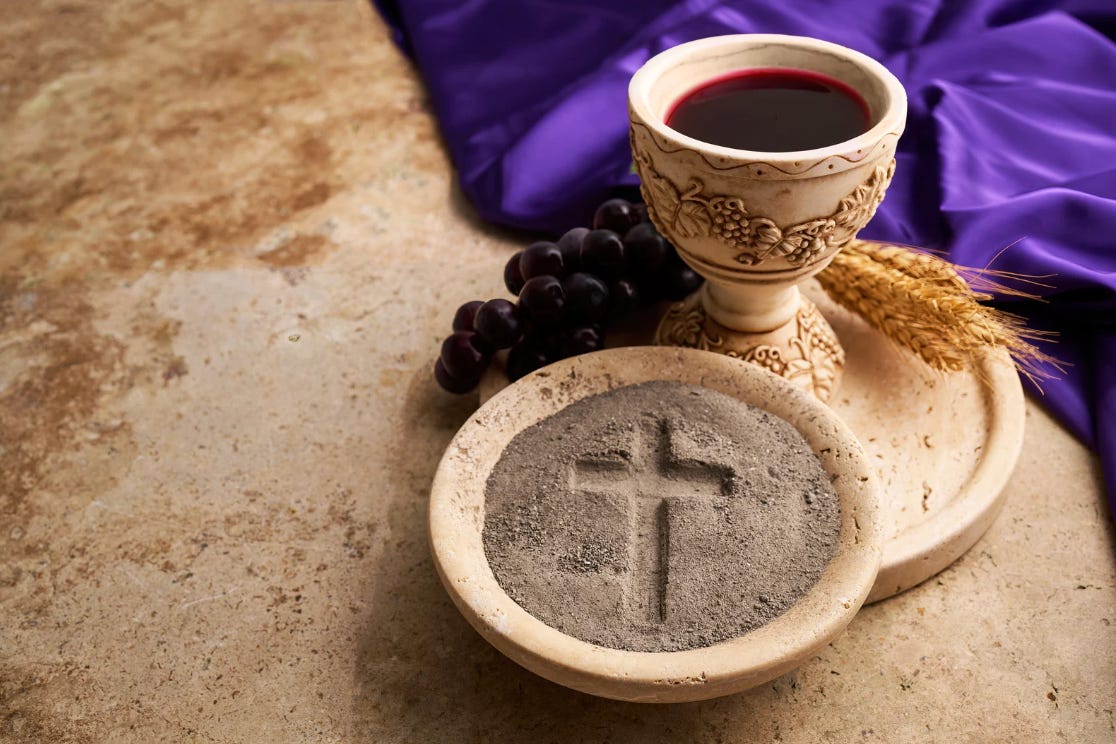
So, now, we take part in the new upcycled tradition of The Feast of the Unleavened Bread and call it Holy Communion. Where Jesus makes a new covenant that encompasses anyone who believes in him for the remission of their sins now and forever.
What Jesus did on Thursday reminds us that:
Just because it’s broken doesn’t mean it needs to be discarded.
If Jesus upcycled a tradition started centuries ago, what can he do with the things broken in your life? The Bible says that anyone in Christ Jesus is a new creature; old things are made into new things (2 Corinthians 5:17).
Jesus is the master at upcycling, so we can confidently put whatever is broken in his hands and watch him transform it into something new and useful.
Thanks for reading. The Gospel is free. Share it.
Next
What's So Good About It?

Last night was rough, and today will be the most challenging day of Jesus’s life. He has seen this day coming and has prepared himself and those close to him for it.
A Referee Devotional is a reader-supported publication. To receive new posts and support my work, consider becoming a paid subscriber.